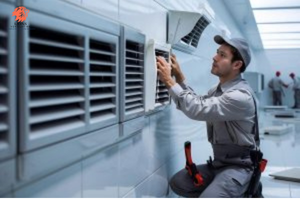
When your air conditioner suddenly stops cooling on a hot afternoon, things get uncomfortable fast. In many cases, the issue traces back to a refrigerant leak, and that is where emergency AC repair in Auckland steps in with urgency and precision. These leaks are not always obvious, and guessing the problem rarely works. Technicians follow a method, not luck, to find and fix the issue.
Why Refrigerant Leaks Need Immediate Attention
A refrigerant leak is not just about losing cool air. It affects pressure levels inside the system, forcing the compressor to work harder than it should. Leave it unchecked, and you are looking at higher energy bills, worn-out components, or even a full system failure. Frankly, this is one of those problems that only gets worse with time.
Initial On-Site Check and Early Warning Signs
The moment a technician arrives, they do a quick but sharp inspection. Oil stains around joints, a faint hissing sound, or ice forming on the evaporator coil can all point to a leak. Sometimes, the signs are subtle, and that is where experience really shows. A new technician might miss it, but a seasoned one rarely does.
Using Detection Tools That Actually Work
After the initial check, proper tools come into play. Electronic leak detectors can sense tiny refrigerant traces in the air, even when the leak is too small to see. UV dye testing is another method, where a special dye is added and later traced under ultraviolet light. Pressure testing may also be used, especially in larger commercial systems. It sounds technical, but for a trained team handling emergency AC repair in Auckland, it is routine work.
Pinpointing the Leak and Planning the Fix
Once the leak is confirmed, the exact location matters. It could be a loose valve, a cracked coil, or a worn-out connection. Each case needs a slightly different approach. Some leaks can be sealed, while others require part replacement. And yes, the system must be recharged with the correct refrigerant level afterwards, otherwise the problem comes right back.
Why Speed Matters in Emergency Situations
Timing is everything here. A delayed response can push a simple repair into a costly breakdown. That is why emergency teams move quickly but still follow each step carefully. No shortcuts, just efficient work. It is a balance between speed and accuracy, and getting that right is what keeps your system running safely.
Post-Repair Testing and Final Safety Checks
Before wrapping up, the system is tested under normal running conditions. Airflow, temperature drop, and pressure readings are checked again to confirm everything is stable. Any leftover moisture or air is cleared out to avoid future issues. It is a small step, but it makes a big difference in how long the repair actually holds well.
Fix It Fast or Pay Later
Ignore a refrigerant leak, and your AC will remind you at the worst possible time. Deal with it early, and you save money, stress, and a lot of sweat. Lions Ventilation handles urgent AC issues with a calm, methodical approach that actually works. Their technicians know these systems inside out, from small home units to large commercial setups. When the heat kicks in, they are the people you want on your side.
testimonials
What Our Clients Say
Nick
Max
Andrew
Roger
FREQUENTLY ASKED QUESTIONS
Usually, most installations can be done within a day, depending on the kind of system and its installation needs.
All important components are examined to make sure that your heat pump performs well and doesn’t have any problems.
Certainly, we perform emergency repairs to fix your heating or cooling system very quickly.
Your heat pump should be served at least once a year to make sure that it performs well.
Absolutely, we repair all types of AC and heat pumps – split, ducted, multi-split systems, etc.
Yes, it definitely makes your system more efficient and prolongs its lifespan.

At Lions Ventilation we provide heating and cooling solutions in Auckland. Our services include installation, maintenance, and repair of your air conditioners and heat pumps. Our aim is to make sure that your HVAC systems work efficiently all year round.